A case study
Whitman, as printed
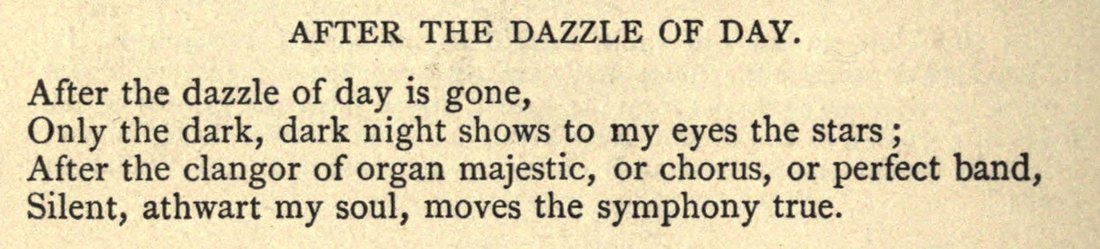
stanza sets a poem the way the writer intends. To be sure of that, we held every poem of Walt Whitman’s in stanza against the page it came from, the 1891–92 Leaves of Grass, and changed what didn’t match.
Thirty-nine poems and passages, thirty-two printed pages. Where the type was too fine to judge by eye, we measured it on the full-size page.
1 The title, and a line too long
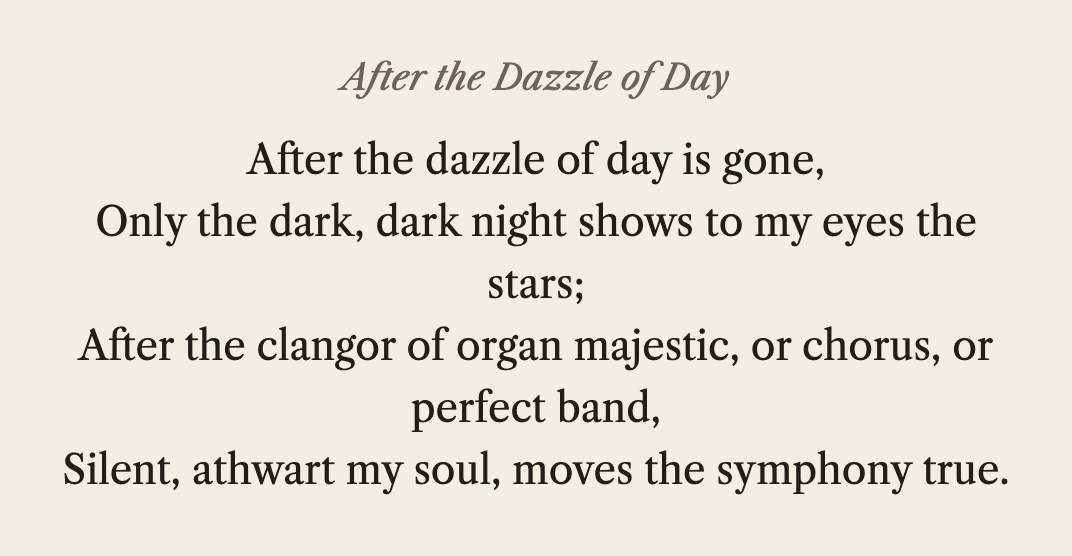
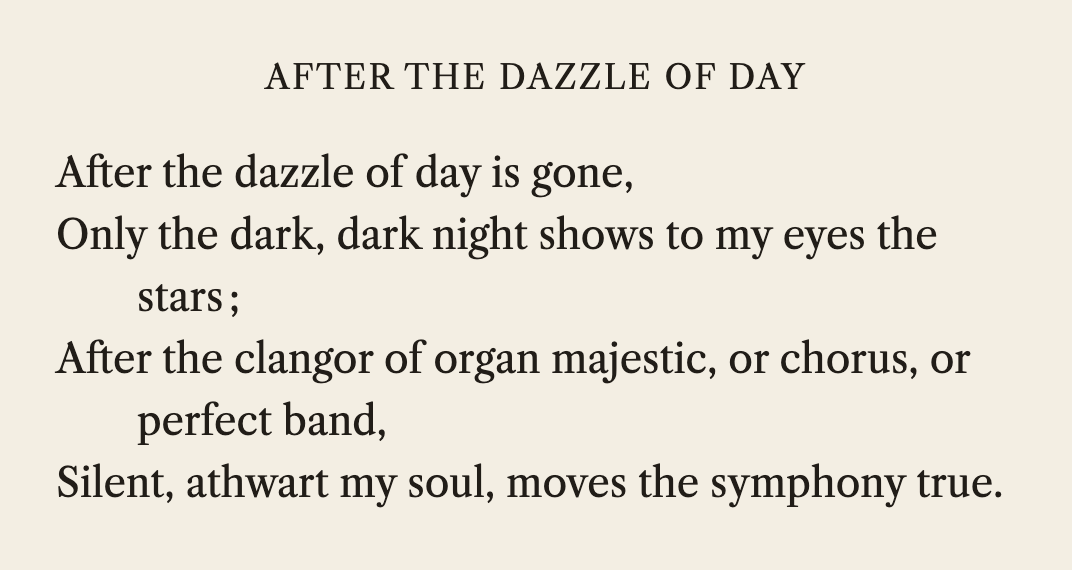
The page sets a title in capitals a size below the poem, centered over it, in the same black, with two thirds of a blank line beneath it. stanza had a grey italic, softer than the poem on every count. Measured on the page, a title’s capitals stand 0.83 the height of the poem’s; stanza’s now do too. And a line too long for the page turns over and hangs, so no one takes it for a line of its own. stanza had centered it.
2 His italics, and a thin space
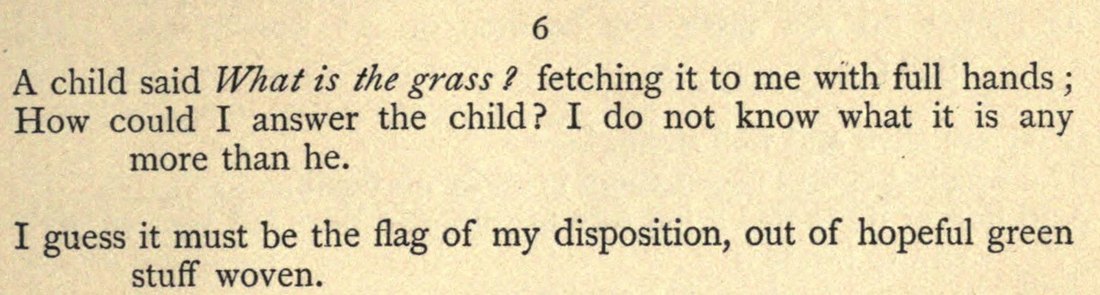
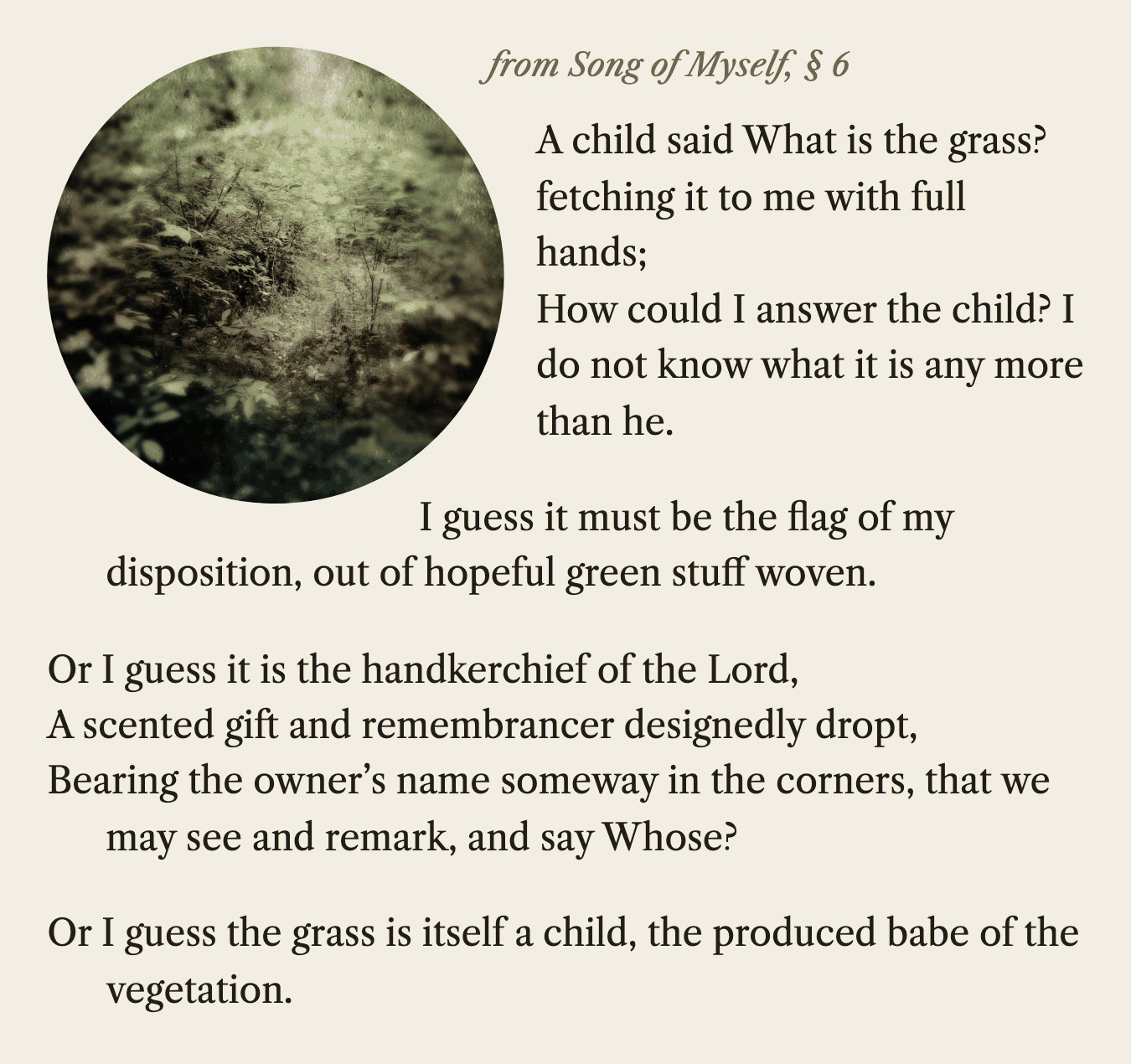
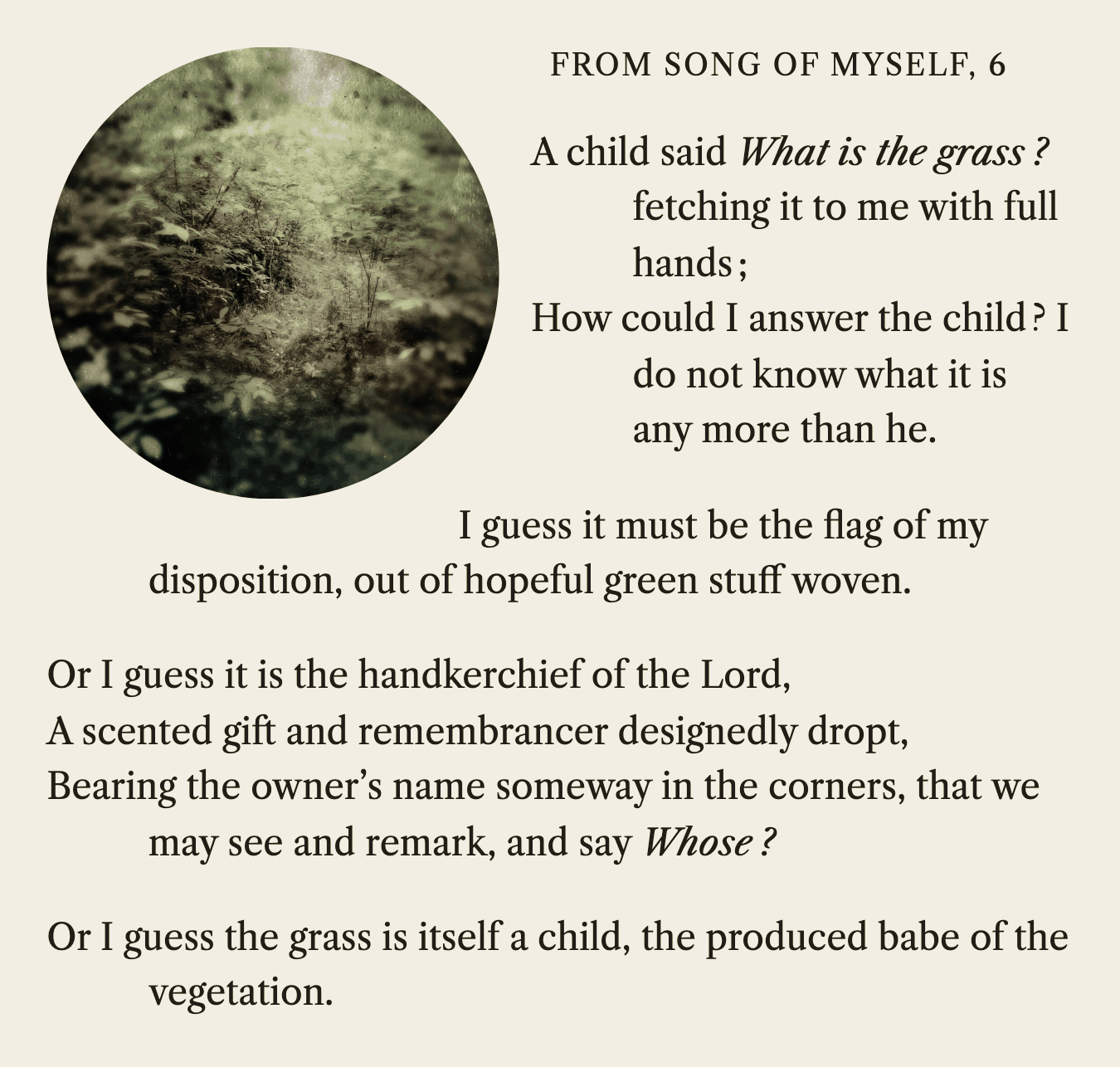
What is the grass? is in italic on the page, and so is Whose?; stanza had them roman. The printer sets a thin space before ; : ! and ?, all through the book, and stanza now does too, with a space that never lets the mark fall to the next line. Beside the picture, a line that turns over still hangs.
3 A headnote, the first word, the long dash
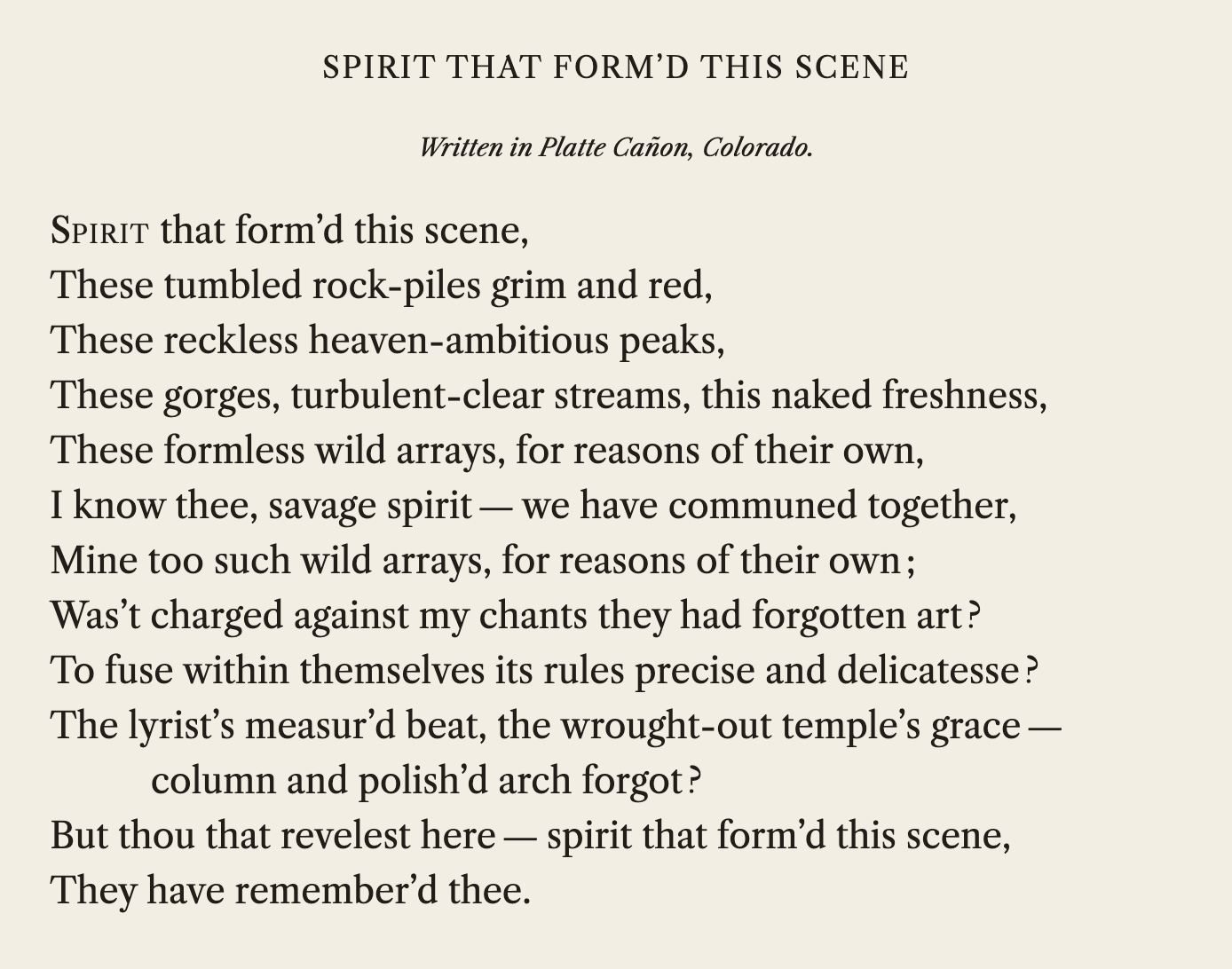
Under the title the page prints Written in Platte Cañon, Colorado., a size below the title; stanza had dropped it. The first word is in a capital and small capitals, as most of the poems open on these pages. The long dash is spaced, as on the plates of 1881. A line that turns over hangs as deep as the page hangs one: 2.8 ems, measured, where stanza had 1.6. And the column beside the picture is wider, so his lines stand whole, as they do on his page.
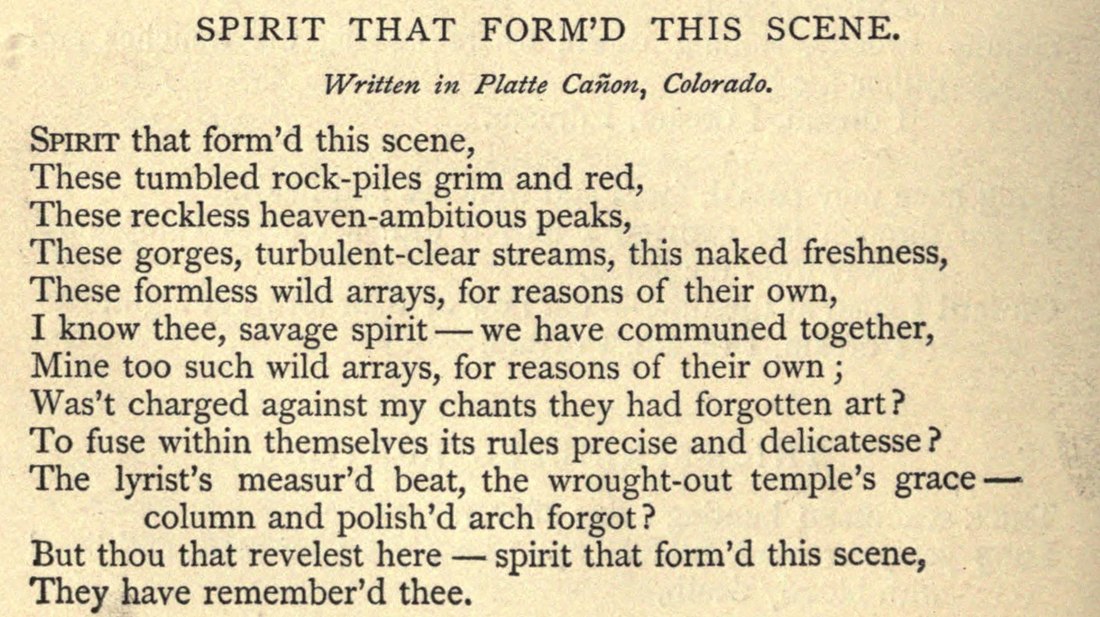
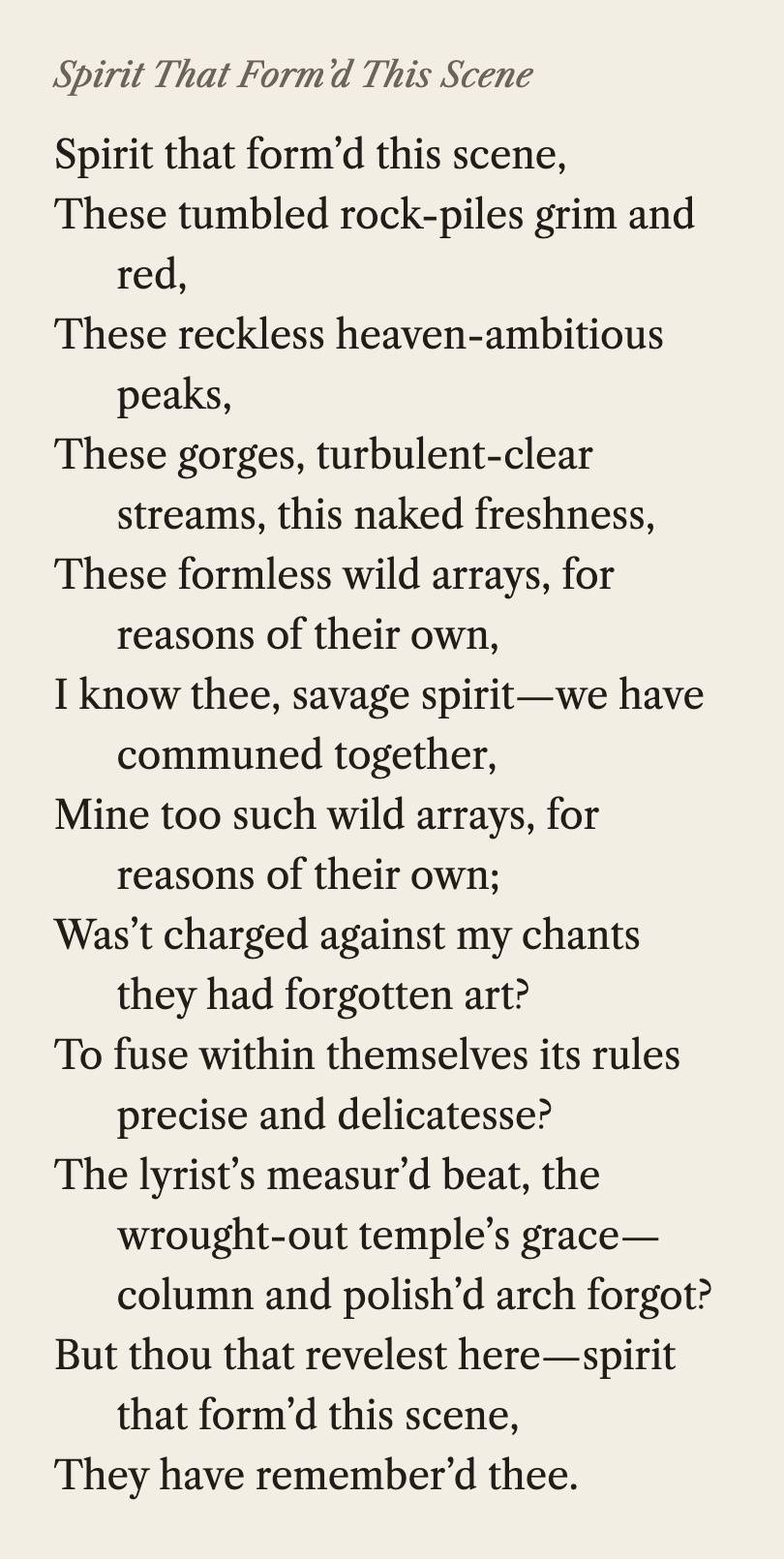
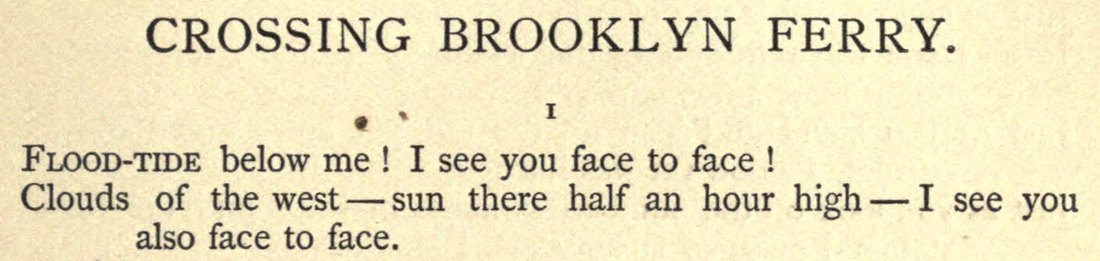
4 Two lines, every mark
“Flood-tide” in a capital and small capitals; “me !” and “face !” with their thin spaces; “west — sun” with its spaced dash; and the turned-over line, hung.
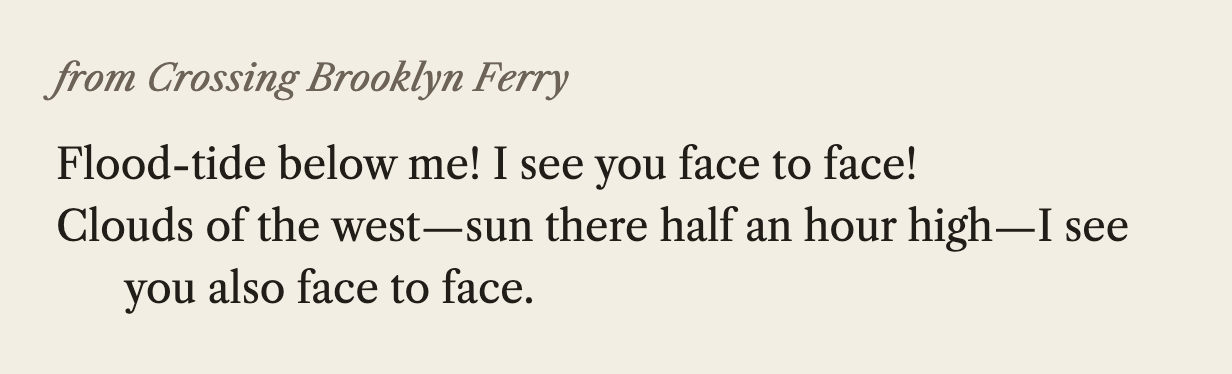
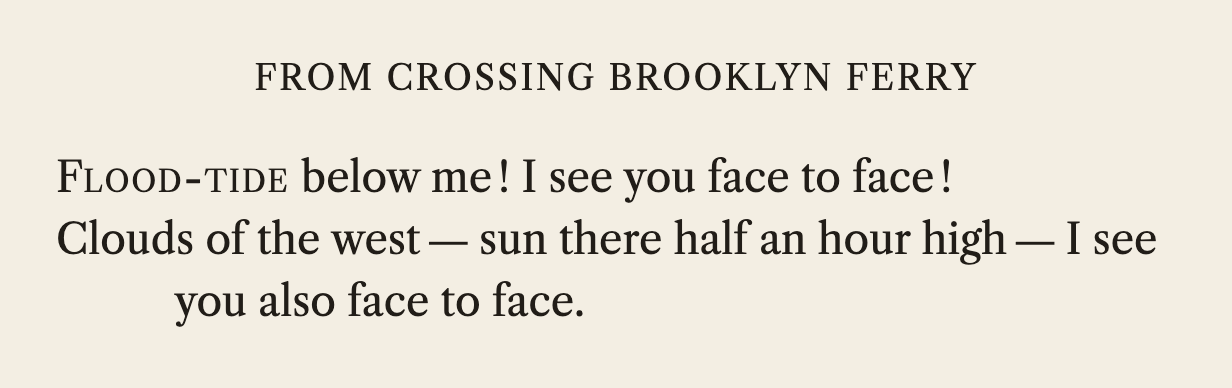
The page, and stanza now
- The words
- Across 39 poems, two places differed from the page: “journey-work” had lost its hyphen, and What is the grass? its italics.
- A title
- Capitals, centered over the poem, 0.83 the poem’s size, with the poem’s first line 1.64 lines beneath it.
- A headnote
- In its own type, a size below the title.
- The first word
- A capital and small capitals, in the 22 poems whose pages open so.
- Before ; : ! ?
- A thin space that never breaks.
- The long dash
- Spaced on the 1881 plates, closed in the late additions.
- A line that turns over
- Hangs 2.8 ems on the 1881 plates and 2 in the late additions, in every layout, even beside a picture.
- The measure
- Wide enough beside a picture that his lines stand whole, as on his page.
- Italics
- His own, kept wherever a poem is set.
Your own poems are set as you type them: every indent, every space, every line where you broke it. Whitman’s are set as his page set them.
The printed pages: Leaves of Grass (Philadelphia: David McKay, 1891–92), from the Internet Archive’s scan. The pictures: Todd Stabley.